
rationale &
procedure
MMMSP
The Mass Media Music Scholars’ Press
|
|
|
|
|
|
|
|
rationale & procedure |
|
|
|||
Please do not re-post or otherwise distribute digital copies of any of these books.
Such misappropriation is illegal and jeopardises the existence of this website (explanation)
|
Everyday Tonality II: towards a tonal theory of what most people hear (Philip Tagg, 2014-15; PDF) 600 pp. A5 (148×210 mm.) 289 examples. 113 charts, figures and tables. ISBN 978-0-9908068-0-6. v2.6.6, 2018-04-23. Min. £5.90 (rec. £11.80) no hard-copy version yet available |
|
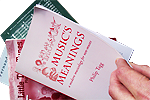
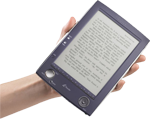
Music’s Meanings: a modern musicology for non-musos (P Tagg, 2012; PDF e-book) 710 pp. A5 (148×210×36 mm; 1143 g. ISBN 978-0-9701684-5-0.   Downloads, donation suggestions and info about this book. Downloads, donation suggestions and info about this book. |
 |
A Bang, a Whimper and a Beat: Industrial Music and Dystopia (Karen Collins, 2012/2002) 251 pp. ISBN 978-0-9701684-6-7 Download this Kindle book direct from Amazon. |
 |
|
 |
Ten Little Title Tunes |
 |
Fernando
the Flute Fernando the Flute IV (c. 480 pp. A5) is under preparation. It will replace the 2000 edition in January 2022). |
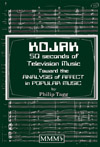 |
Kojak - 50" of TV Music |
©
2000-2019
MMMSP. Updated 2019-09-30 |
||||
MMMSP e-books
Go to hard copy
|
|||||
| space for coming title | |||||
|
A Bang, a Whimper and a Beat: Industrial Music |
 |
Everyday Tonality (I) Discontinued. Replaced by
|
|
Rock in the Reservation |
|
Ten Little Title Tunes |
|
Fernando
the Flute Fernando the Flute IV (c. 450 pp. A5) is under preparation. It will replace the 2000 edition in December 2019). |
|
Kojak - 50" of TV Music |
Please do not re-post or otherwise distribute digital copies of any of these books.
|
|||||
 |
Everyday Tonality II: towards a tonal theory of what most people hear (Philip Tagg, 2014) 598 pp. 148 × 210 mm. ISBN 978-0-9908068-1-3 |
 |
Music’s Meanings: a modern musicology for non-musos (Philip Tagg) £17.32 + shipping |
||
|
If a book is unavailable in hard-copy and if you want it in that form (e.g. to put on a shelf in a library), please proceed as follows.
Please do not re-post or otherwise distribute digital copies of the book. Such misappropriation is illegal and jeopardises the existence of this website (explanation) [1] To make the print-out look as intended and to avoid wasting resources, please use A5-size paper (148× 10 mm 5.8×8.3×1.4") |
|||||